Tuesday, January 31, 2012

Night Fighters


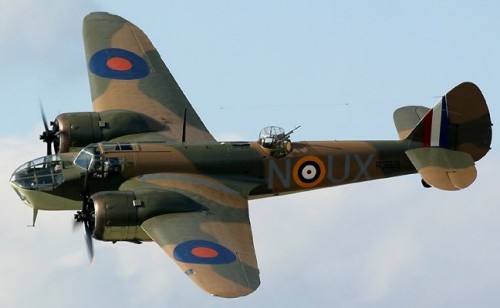
In the battle of Britain, the RAF converted twin-engined bombers like the "Bristol Blenheim" into a nightfighter. This was done by installing offensive ordance and radar. Those had very little success because they were not any faster than their prey. Messerschmitts Me 110 wich was a disasterous fail. As a two-engined two seated day fighter,it was very successful at night-fighting along with other similarly modified Ju 88 bombers.


NOAH

Day Fighters

Allied Spitfire performing practice maneuvers.


   Air superiority was a crucial role to the outcome of the decisive campaigns of World War II.  Dominate fighters in early WWII (1939-41) were the Supermarine Spitfire, the (Bayerische Flugzeugwerke BF 109) (known to the allies as the Me 109), the Japanise Zero,the Hawker Hurricane, and lastly the Grumman F4F Wildcat.  These were all crucial to the county they faught for in many of the battles in WWII.


NOAH

Monday, January 30, 2012

Reconnaissance Aircraft


Image of WWI British Reconnaissance Aircraft


     In the outbreak of WWI, heavier-than-air craft were used for visual reconnaissance, since their powerful engines could carry much more than one pilot.
Even more powerful engines and better design soon made possible special reconnaissance aircraft that could fly at much higher altitudes to avoid interception with enemy aircraft.  This was a crucial factor to getting the information needed to gather intelligence.


TONY

Sunday, January 29, 2012

Airships


German forces had 10 zeppelins at the beginning of the war. 

    The Germans abandoned their airship operations after many losses during battle. The finest Zeppelin was the LZ-70. It was 720 feet long and was able to fly above 4,900 meters. The LZ-70 was later shot down by allied forces.  One reason german zeppelins were so vonerable were because they were filled with flamable hydrogen.  The reason for this was because the united states controlled most of the worlds helium supplies.


TONY